
Restore Worn Floors
Address scratches, dull finishes, discoloration, and normal surface wear.
Hardwood floor refinishing removes surface wear, scratches, and an aging finish to restore the appearance of existing wood flooring. Professional refinishing can renew many hardwood floors without the cost and disruption of a full replacement.
Hardwood doesn't need refinishing just because the floor has lost some shine. Routine cleaning, maintenance, or a less intensive surface treatment may be enough when the existing finish remains largely intact.
Full refinishing becomes more appropriate when wear reaches beyond minor surface dullness. A professional should inspect the floor before sanding because wood thickness, previous refinishing, and existing damage determine what work is suitable.
Professional hardwood refinishing typically involves preparation, sanding, optional staining, and application of a protective finish. Each stage affects the restored floor's final appearance and performance.
Project requirements vary according to wood species, floor condition, and the desired finish. Existing coatings and previous refinishing can also influence how the contractor approaches the work.
The contractor first evaluates the hardwood to determine whether sanding is appropriate. Solid hardwood can often be refinished multiple times, while engineered flooring depends on the thickness of its real-wood wear layer.
Loose boards, protruding fasteners and damaged sections should be identified before sanding. Repairs completed at this stage help create a more consistent surface for the remaining refinishing work.
Professional sanding removes the existing finish and a thin layer of the wood surface. Contractors generally progress through appropriate abrasive grits to remove old coatings while preparing a smoother surface.
Corners and edges require equipment suited to areas that larger floor sanders cannot reach. Careful sanding is important because excessive or uneven material removal can permanently affect the floor.
Stain is optional, not required, in every refinishing project. Homeowners can retain a more natural wood appearance or select a compatible stain to alter the finished color.
Wood species absorb stain differently, so sample areas can help establish realistic expectations. Existing age and natural variation may also create subtle differences across the finished floor.
Apply a protective finish after sanding and staining are complete. The finish helps protect hardwood from normal traffic, spills, and surface wear while creating the desired sheen.
Multiple coats may be required depending on the finishing system. Drying and curing times should follow product requirements before furniture, rugs, and normal household activity return to the room.
Professional hardwood floor refinishing generally costs around $3 to $8 per square foot. A typical project can cost roughly $1,100 to $2,700, while large floors, extensive repairs and complicated layouts can increase the final total.
The estimate depends on floor area, hardwood condition, labor requirements and finishing choices. Staining, stairs, and damaged boards can add work beyond a straightforward sand-and-finish project.
Professional hardwood floor refinishing.
At $3 to $8 per square foot, refinishing 500 square feet can cost about $1,500 to $4,000.
| Cost Item | Typical Range |
|---|---|
| Hardwood refinishing | $3–$8 / sq. ft. |
| Typical project | $1,100–$2,700 |
| 500 square feet | $1,500–$4,000 |
Minimum project charges and difficult room conditions can make smaller spaces cost more per square foot than large open areas.
Refinishing is often more economical when the existing hardwood remains structurally sound. The process preserves the installed wood while removing surface damage and renewing the protective finish.
Replacement becomes more appropriate when the floor has extensive structural damage, insufficient material for additional sanding, or widespread problems that refinishing cannot correct. Inspection should determine which option provides the better long-term result.
Solid hardwood generally provides strong refinishing potential because each board contains wood throughout its thickness. Many solid floors can be sanded multiple times during their service life.
The exact number depends on previous sanding and the remaining wood above the tongue-and-groove connection. A contractor should inspect older flooring rather than assuming another full sanding is automatically safe.
Engineered hardwood contains a real-wood surface layer over a layered core. Some products can be refinished, while others have a wear layer too thin for conventional sanding.
If the flooring is unknown, a professional should evaluate the wear layer before using sanding equipment that could expose the material underneath.
Widespread rot, movement or major water damage can make replacement more appropriate than refinishing. Sanding changes the surface appearance but cannot restore structurally compromised flooring.
Localized damage does not necessarily require complete replacement. You can sometimes repair individual boards before refinishing the surrounding hardwood for a more consistent appearance.
Hardwood refinishing temporarily limits access to the rooms being restored. Homeowners should plan for furniture removal, sanding, coating, and curing before scheduling the project.
The exact timeline depends on square footage, repairs, stain selection, and finishing products. Contractors should explain when normal foot traffic, furniture, and rugs can safely return.
Remove furniture and movable belongings before sanding begins. Empty rooms give refinishing equipment full access and reduce the risk of dust or finish affecting household items.
Ask whether the project includes moving furniture. Large or unusually heavy items can require separate arrangements before the refinishing crew arrives.
Modern sanding equipment can capture a significant amount of dust, but refinishing should not automatically be described as completely dust-free. Some fine particles can still escape during sanding and edge work.
Doorways and adjoining spaces may require protection depending on the equipment and project layout. Contractors should explain the dust-control process before work starts.
Drying time refers to when a coating can tolerate the next step, while full curing can take considerably longer. Follow the finish manufacturer's requirements rather than assuming a floor is fully cured once it feels dry.
Furniture, rugs, and heavy traffic may need to remain off the floor beyond initial drying. Returning them too soon can affect a finish that has not reached adequate hardness.
Floor Ready Pro helps homeowners find hardwood refinishing professionals throughout Washington, Ohio, Florida, and California. Climate, housing age, and existing floor construction can influence how individual projects are evaluated.
Washington's seasonal moisture conditions make stable indoor humidity useful for hardwood performance. Investigate existing water damage before sanding rather than hiding it beneath a new finish.
Ohio contains many older homes with hardwood that may have already undergone previous restoration. Contractors should determine the remaining sanding allowance and check for repairs before refinishing begins.
Florida's humidity makes indoor climate control important for hardwood flooring. Correct active moisture problems before restoration because a new surface finish cannot fix moisture originating below the floor.
California properties include hardwood floors exposed to different coastal, inland, and dry climate conditions. Contractors should evaluate the actual flooring condition and indoor environment before recommending a refinishing system.
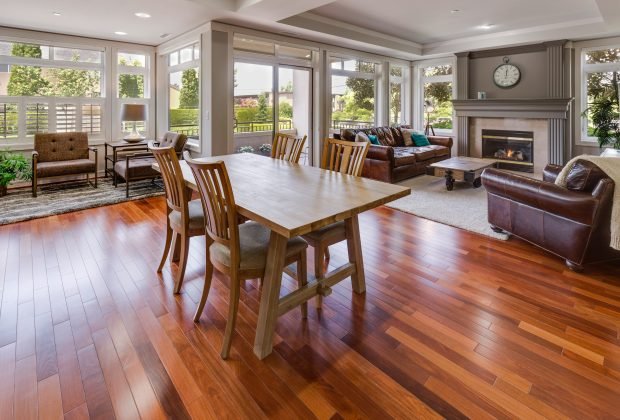
Routine maintenance helps protect the newly refinished surface after the coating has fully cured. Regular sweeping or vacuuming removes grit that can scratch the finish as people walk across the floor.
Clean spills promptly and use products approved for the finish. Excess water, steam cleaning, and harsh chemicals can damage wood or compromise certain finishing systems.
Protect the new finish:
Direct sunlight can gradually change hardwood color. Window coverings and occasional furniture or rug adjustments can help reduce sharp differences between continuously exposed and covered sections.
Professional hardwood refinishing generally costs around $3 to $8 per square foot. A typical project can cost approximately $1,100 to $2,700, although floor condition, repairs and staining can increase the total.
No. Solid hardwood can often be refinished several times, but the remaining thickness must be sufficient for another sanding. Engineered hardwood can only be refinished when its real-wood wear layer is thick enough.
Many residential refinishing projects require several days for preparation, sanding, staining and finish application. The selected coating system and required curing time determine when furniture, rugs and normal traffic can return.
No. Staining is optional and is mainly used when homeowners want to alter or even out the wood color. Hardwood can also receive a compatible protective finish without adding a separate stain.
Refinishing is generally less expensive when the existing hardwood remains suitable for restoration. Replacement may provide better value when the floor has widespread structural damage or insufficient material for another sanding.
Hardwood refinishing can restore worn flooring while preserving the existing wood beneath the old finish. The best results depend on proper inspection, controlled sanding and a finishing system suited to the floor and household.
Floor Ready Pro helps homeowners across Washington, Ohio, Florida and California find professionals for hardwood sanding, staining, finishing and restoration projects.