
Wear Layer
The transparent top layer protects the printed design from routine foot traffic, stains, and scratches. Wear-layer performance varies by product, so specifications matter for households with pets, children, or heavy traffic.
Laminate flooring provides the appearance of hardwood without the price of many solid and engineered wood products. Modern laminate combines a durable wear surface, detailed wood or stone visuals, and click-lock installation systems suitable for bedrooms, living rooms, hallways, offices, and other residential spaces.
Floor Ready Pro helps homeowners compare laminate flooring and installation services across Washington, Ohio, Florida, and California. Product thickness, AC rating, water resistance, underlayment, subfloor condition, and installation quality all affect how the finished floor performs.
Laminate flooring consists of multiple layers pressed together into individual planks. Unlike hardwood, the visible wood grain comes from a printed decorative layer rather than a solid piece of natural wood.
Most laminate products contain four primary components.
The transparent top layer protects the printed design from routine foot traffic, stains, and scratches. Wear-layer performance varies by product, so specifications matter for households with pets, children, or heavy traffic.
A high-resolution image creates the appearance of oak, maple, hickory, walnut, stone, tile, or another surface. Embossed textures can add grain patterns that make modern laminate look more similar to natural wood.
Most laminate uses a high-density fiberboard or similar wood-based core. The core gives each plank structural strength but also explains why water exposure requires more consideration than with many vinyl products.
The bottom layer helps stabilize the plank and provides additional protection between the core and substrate.
Some products also include attached underlayment.
Laminate products vary substantially in construction and performance. Selecting a product based only on appearance can result in the wrong floor for the room.
Laminate is generally positioned below hardwood in overall project cost. Material quality, plank thickness, wear rating, waterproof construction, underlayment, demolition, and floor preparation affect the final amount.
Many professionally installed laminate projects fall around $3 to $10 per square foot. Higher-grade waterproof products and projects requiring significant preparation can cost more.
Typical range for many professionally installed laminate projects.
At $5 per square foot, a 1,000-square-foot project would total about $5,000. At $8 per square foot, the same floor area reaches approximately $8,000.
| Project Component | Typical Planning Range |
|---|---|
| Basic laminate material | Up to $3 / sq. ft. |
| Mid-range laminate material | Up to $5 / sq. ft. |
| Higher-grade/waterproof laminate | $7+ / sq. ft. |
| Typical installed laminate | $10+ / sq. ft. |
These ranges provide planning figures rather than contractor quotes. Local labor rates and project conditions in Washington, Ohio, Florida, and California can change actual costs.
Two laminate projects with identical square footage can have different totals. Installation conditions matter almost as much as the material selected.
The Abrasion Class, or AC rating, provides one way to compare a laminate floor's resistance to wear. Common ratings range from AC1 through AC5, although the appropriate rating depends on the product and intended application.
| AC Rating | General Application |
|---|---|
| AC1 | Light residential use |
| AC2 | Moderate residential use |
| AC3 | Heavy residential/light commercial use |
| AC4 | General commercial/heavy residential use |
| AC5 | Heavy commercial use |
A higher rating does not automatically make a product the best choice. Consider price, moisture resistance, construction, appearance, warranty, and installation conditions.
Installers calculate the floor area and account for closets, hallways, transitions, and irregular sections. Installers typically order extra material for cuts, waste, damaged pieces, and possible future repairs.
The existing surface is checked for moisture, movement, damage, high spots, low areas, and debris. Identify problems before installing the laminate.
Old flooring is removed where required. Secure loose subfloor panels, replace damaged sections, and correct uneven areas.
Concrete installations may require moisture evaluation and a manufacturer-approved vapor-control system.
Install separate underlayment when required by the selected product. Seams and perimeter details should follow manufacturer instructions.
Establish plank direction and starting points before installation. A planned layout helps avoid extremely narrow boards at prominent walls and creates more balanced rows.
Most modern laminate uses a floating click-lock system. Planks connect to each other rather than being nailed directly to the subfloor. Required expansion space remains around walls and fixed objects so the floor can respond to environmental changes.
Thresholds, reducers, transition strips, baseboards, and quarter round complete the installation. Trim should cover expansion spaces without preventing the floating floor from moving as designed.
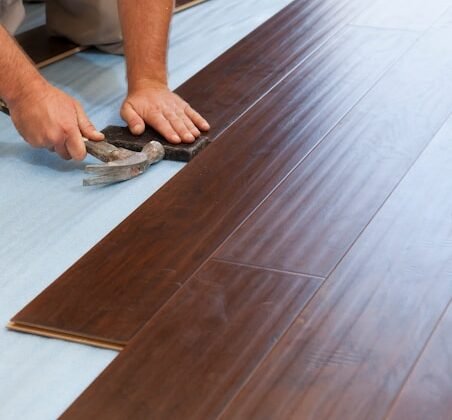
Many laminate floors require underlayment, but the correct answer depends on the specific product.
Underlayment can provide:
Concrete installations may require additional vapor protection.
Some modern laminate products already include an attached pad. Add another underlayment beneath these products only if the manufacturer specifically permits it.
Laminate and vinyl both provide wood-look alternatives to hardwood, but they use different materials and construction.
| Feature | Laminate | Vinyl |
|---|---|---|
| Core | Usually wood fiber based | Synthetic/composite |
| Wood appearance | Printed design | Printed design |
| Water resistance | Product dependent | Generally higher |
| Scratch resistance | Often strong | Product dependent |
| Installation | Usually floating | Floating or glue-down |
| Refinishing | No | No |
| Concrete use | Yes, with proper system | Common |
| Wet-room suitability | Waterproof products only where approved | Broader product selection |
Laminate can provide realistic wood texture and strong scratch resistance. Vinyl generally provides an advantage where frequent water exposure is expected.
Hardwood provides a natural wood surface, while laminate reproduces wood appearance using a decorative image.
Hardwood can often be refinished after years of wear. Laminate cannot be sanded and refinished in the same manner.
Laminate usually costs less and can resist some everyday scratches. Hardwood offers natural variation and potentially several decades of service with refinishing.
Traditional laminate should not be considered waterproof. Its wood-based core can swell or deteriorate after prolonged moisture exposure.
Modern waterproof-rated laminate systems provide substantially better protection, but you must interpret the term according to the manufacturer's warranty and testing conditions.
A waterproof surface also does not prevent water from entering around walls, transitions, plumbing penetrations, or underneath the floor during flooding.
For bathrooms, laundry rooms, basements, and kitchens, check the product's approved applications before installation.
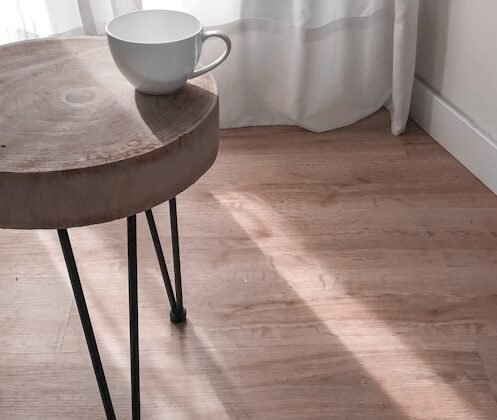
Laminate can work well in homes with dogs and cats because many products resist surface scratching.
Product texture also matters. Very smooth surfaces can provide less traction for some pets.
Pet accidents and spilled water should be cleaned promptly, particularly when the selected laminate does not carry a waterproof rating.
Washington's wet conditions make moisture management important near exterior doors, ground-level rooms, and basements. Water-resistant or waterproof-rated laminate can provide additional protection in active households.
Still check subfloor moisture and manufacturer installation requirements before work begins.
Ohio's seasonal temperature and humidity changes make expansion spacing and indoor environmental control important for floating laminate floors. Laminate works well in many bedrooms, living areas, offices, and dining rooms.
Basement projects require additional attention to concrete moisture.
Florida's humidity and prevalence of concrete slabs make moisture evaluation particularly important. Waterproof-rated laminate can provide a wood-look alternative for suitable spaces, but the product must be approved for the intended room and substrate.
Evaluate concrete moisture conditions before installation, rather than assuming a waterproof surface solves moisture coming from below.
California homes range from coastal properties to dry inland environments, so flooring conditions differ substantially across the state. Laminate can provide a cost-conscious wood appearance in bedrooms, living rooms, offices, and other dry interior spaces.
Product selection and installation should match the property's substrate and indoor environment.
A laminate floor can typically provide about 15 to 25 years of residential service, but product quality, traffic, moisture exposure, installation, and maintenance can shorten or extend that period.
Higher-grade products in moderate-traffic spaces can remain usable longer than entry-level laminate exposed to heavy wear or repeated moisture.
Unlike hardwood, laminate cannot normally be sanded and refinished after the wear surface deteriorates.
Remove dust, grit, and loose debris regularly using a soft broom, microfiber mop, or suitable vacuum attachment.
Use minimal moisture when cleaning unless the manufacturer specifically approves another method. Do not leave standing water on the floor.
Protective furniture pads can reduce scratches. Entry mats help capture sand and grit before abrasive particles reach the laminate surface.
Avoid steam cleaners unless the flooring manufacturer specifically permits steam cleaning.
Individual cosmetic marks do not necessarily justify replacing an entire laminate floor.
Replacement becomes more appropriate when large areas show:
Localized plank replacement may be possible depending on the floor layout and installation system.
Laminate installation may appear straightforward, but preparation determines much of the finished result.
Compare estimates that specify:
Floor Ready Pro helps homeowners compare laminate flooring installation services throughout Washington, Ohio, Florida, and California.
Professionally installed laminate floors cost about $3 to $10+ per square foot. Product quality, waterproof construction, old-floor removal, underlayment, subfloor preparation, stairs, and local labor rates affect the final price.
Laminate generally costs less to purchase and install than solid hardwood. Hardwood costs more initially but can last longer because many hardwood floors can be sanded and refinished.
Traditional laminate is not waterproof. Some newer products use waterproof-rated systems designed to withstand spills under specified conditions or for limited periods, so homeowners should check the manufacturer's exact rating and warranty.
Yes. You can install laminate over suitable concrete when the slab meets requirements for flatness, moisture, cleanliness, and structural condition. A vapor barrier or other moisture-control system may also be required.
Many laminate floors require underlayment, although some products include an attached pad. The product manufacturer determines whether separate underlayment is necessary and which type to use.
Some floating laminate products can be installed over existing hard flooring when the surface is stable, sufficiently flat, dry, clean, and manufacturer-approved. Remove damaged or unsuitable flooring first.
A straightforward room may take a day. Whole-house installations, old-floor removal, floor leveling, stairs, or subfloor repairs can extend the project across several days.
Laminate provides a wood-look flooring option with multiple price levels, scratch-resistant surfaces, and modern water-resistant or waterproof-rated products.
Compare laminate products, installation methods, waterproof options, costs, and local installers before choosing flooring for your home.