Skip to content

Vinyl Flooring Installation for Durable, Water-Resistant Floors

Vinyl flooring provides a durable surface for kitchens, bathrooms, bedrooms, living areas, basements, and high-traffic spaces. Modern products range from budget-friendly sheet vinyl to luxury vinyl plank designed to reproduce wood grain, stone, and tile patterns.

Floor Ready Pro helps homeowners compare vinyl flooring products and installation options across Washington, Ohio, Florida, and California. Material thickness, wear layer, waterproof rating, subfloor condition, installation method, and room use should guide product selection.

  • Luxury vinyl plank & sheet vinyl
  • Water-resistant options
  • Washington, Ohio, Florida & California

Vinyl Flooring Options for Your Home

Vinyl flooring comes in several formats. Luxury vinyl plank and sheet vinyl represent two major categories, but construction and performance can differ significantly between individual products.

Selecting the right type requires more than choosing a color or pattern.

Sheet Vinyl Flooring

Sheet vinyl comes in large continuous rolls rather than individual planks. Fewer seams can provide an advantage in rooms where water exposure is a concern.

Sheet products are available in wood, stone, tile, and patterned designs. Kitchens, bathrooms, laundry rooms, rental properties, and utility spaces represent common applications.

Explore Sheet Vinyl Flooring

How Much Does Vinyl Flooring Cost?

Vinyl flooring provides options across several price levels. Basic sheet vinyl generally costs less than higher-grade rigid-core LVP, while preparation and labor can substantially affect the installed price.

A reasonable planning range for many professionally installed vinyl floors is approximately $3 to $12 per square foot. Higher-end materials, stairs, difficult layouts, extensive demolition, moisture mitigation, or significant floor leveling can increase the total.

$3–$12 per sq ft installed

Planning range for many professionally installed vinyl floors.

A 1,000-square-foot project at $5 per square foot would equal approximately $5,000. At $10 per square foot, the same floor area reaches approximately $10,000.

Typical Vinyl Flooring Price Ranges

Vinyl Flooring Type Approx. Installed Cost
Basic sheet vinyl Up to $7 / sq. ft.
Standard vinyl plank Up to $8 / sq. ft.
Luxury vinyl plank Up to $12 / sq. ft.
Higher-grade rigid-core LVP $15+ / sq. ft.

These figures provide budgeting ranges rather than final quotes. Local labor, product selection, demolition, floor preparation, trim, stairs, and room configuration affect actual project pricing.

What Affects Vinyl Flooring Installation Cost?

Material price represents only one part of a vinyl flooring estimate. Two homes with the same square footage can have different installation totals because of preparation requirements.

Vinyl Product

Sheet vinyl, standard plank, waterproof LVP, and rigid-core products occupy different price ranges. Wear-layer thickness, overall plank construction, attached underlayment, design, and manufacturer can also affect material pricing.

Existing Floor Removal

Removal costs depend on the existing material and installation method. Floating floors may be easier to remove than glued flooring or ceramic tile.

Disposal charges and multiple existing flooring layers can add labor.

Subfloor Preparation

Vinyl can reveal imperfections underneath the finished surface. Low areas, high spots, damaged plywood, cracks, loose panels, or adhesive residue may need correction.

A flat substrate becomes particularly important with long vinyl planks.

Subfloor Repair

Stairs and Complex Layouts

Stairs, closets, narrow hallways, multiple doorways, diagonal walls, and detailed room layouts require additional cuts and labor.

Trim and Transitions

Baseboards, quarter round, reducers, thresholds, stair noses, and transitions between different flooring heights can add to the final project cost.

Is Vinyl Flooring Waterproof?

Many modern vinyl flooring products are marketed as waterproof because the planks themselves do not absorb water in the same way as traditional wood flooring.

That does not make the entire floor assembly immune to water damage.

Water can still reach the subfloor through:

  • Perimeter gaps
  • Damaged seams
  • Walls
  • Transitions

Flooding can therefore create moisture problems beneath vinyl even when the flooring material itself remains unaffected.

Product specifications should be checked before installation in bathrooms, basements, laundry rooms, or other moisture-prone areas.

Vinyl Flooring Installation Methods

Vinyl products use different installation systems. The correct method depends on product construction, substrate conditions, manufacturer requirements, and room use.

Click-Lock Floating Installation

Click-lock planks connect to one another and float over the substrate instead of being permanently attached.

This method is common with rigid-core LVP. The installer still needs to maintain manufacturer-specified expansion space and floor-flatness tolerances.

Glue-Down Vinyl

Glue-down vinyl uses adhesive to secure planks or sheets directly to the substrate.

Commercial spaces and high-traffic applications frequently use glue-down systems because the flooring remains firmly attached to the substrate. Surface preparation becomes particularly important because imperfections can transfer through the finished floor.

Loose-Lay Vinyl

Some vinyl products use weight, backing construction, and perimeter requirements rather than full adhesive coverage.

Only products specifically designed for loose-lay installation should use this method.

Sheet Vinyl Installation

Sheet vinyl requires accurate measurements and careful cutting around walls, cabinets, fixtures, and doorways.

Large rooms may require seams. Seam placement and sealing should follow the product manufacturer's requirements.

Vinyl Flooring Installation Process

  1. Measure the Floor

    The project begins with measurements of each room, hallway, closet, and connecting area.

    Installers also calculate extra material for cuts, layout adjustments, waste, and future repairs.

  2. Inspect the Existing Surface

    The installer checks the substrate for uneven areas, moisture concerns, cracks, loose panels, damaged sections, and existing flooring that may interfere with installation.

    Removing the old flooring exposes problems that were not visible during the initial inspection.

  3. Prepare the Subfloor

    The installation surface should be clean, dry, stable, and sufficiently flat for the selected product.

    Preparation can include removing adhesive, fastening loose plywood, patching cracks, filling low areas, grinding high spots, or replacing damaged subfloor sections.

  4. Plan the Layout

    Installers establish the starting line and plank direction before covering the room.

    Planning helps prevent extremely narrow pieces along visible walls and keeps rows visually balanced.

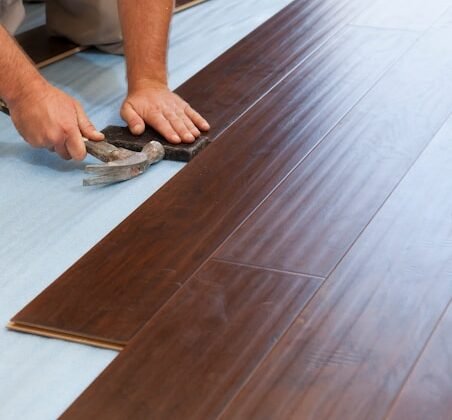
  5. Install the Vinyl

    Planks are clicked together, glued down, or otherwise installed according to the manufacturer's system.

    Sheet vinyl is positioned, trimmed, adhered where required, and seamed according to product specifications.

  6. Complete the Edges

    Transitions, thresholds, baseboards, quarter round, and other finishing pieces complete the floor.

    Furniture and normal foot traffic should return according to adhesive curing or manufacturer requirements.

Vinyl Flooring vs. Hardwood

Vinyl and hardwood can produce similar visual effects, but the materials perform differently.

Feature Vinyl Flooring Hardwood Flooring
Material Synthetic/composite Real wood
Water resistance High on many products Lower
Refinishing Generally no Often possible
Maintenance Relatively simple Requires more moisture control
Concrete slab use Common Product dependent
Wood appearance Printed image/design Natural grain
Installation options Floating or glue-down Nail, staple, glue or floating
Lifespan Product dependent Can last several decades

Hardwood offers a natural surface and refinishing potential. Vinyl generally provides easier moisture management and a lower entry price.

Vinyl Flooring vs. Laminate

Vinyl and laminate both provide alternatives to hardwood, but the core materials differ.

Vinyl flooring uses synthetic or composite construction and typically provides better resistance to water. Laminate commonly uses a wood-fiber-based core beneath the decorative and wear layers.

Waterproof vinyl can make more sense in:

  • Bathrooms
  • Laundry areas
  • Basements
  • Kitchens

Laminate remains competitive in dry living areas where appearance, scratch resistance, and price drive the decision.

Compare Laminate Flooring

Where Can Vinyl Flooring Be Installed?

Kitchens

Water resistance and straightforward cleaning make vinyl a practical kitchen flooring option.

Use protective pads beneath heavy appliances and follow manufacturer requirements when moving refrigerators or ranges across the finished floor.

Bathrooms

Waterproof-rated vinyl products can work in bathrooms when installation and perimeter details meet product specifications.

The subfloor should still be protected from leaks and standing water.

Basements

Vinyl is frequently considered for basements because many products tolerate moisture better than traditional hardwood.

Concrete moisture should still be evaluated before installation. A waterproof plank does not solve an underlying slab moisture problem.

Bedrooms

LVP can reproduce hardwood appearance while requiring relatively simple routine cleaning.

Area rugs can add softness where desired.

Living Rooms

Vinyl plank can handle living-room traffic while offering wood and stone visual options.

Wear-layer selection becomes more important in homes with children, pets, or heavy daily use.

Understanding LVP Wear Layers

The wear layer sits above the printed design and helps protect vinyl flooring against surface wear. Manufacturers commonly express wear-layer thickness in mils.

Residential products may use wear layers around 6, 12, or 20 mil, while products intended for heavier traffic can use thicker protective layers.

A mil is one-thousandth of an inch. A 20-mil wear layer therefore equals 0.020 inches, not 20 millimeters.

Thicker does not automatically mean the best flooring for every room. Traffic level, finish technology, warranty conditions, product construction, and budget should also influence selection.

Vinyl Flooring for Homes With Pets

Vinyl flooring can provide a practical combination of water resistance, easy cleaning, and scratch resistance for households with pets.

No floor is completely scratch-proof. Pet nails, dragged furniture, trapped grit, and heavy objects can still mark the surface.

Look at wear-layer specifications and manufacturer warranty exclusions when comparing products for high-traffic homes.

Vinyl Flooring in Washington, Ohio, Florida & California

Service Areas

Vinyl Flooring in Washington

Washington homeowners should consider moisture exposure from wet footwear, seasonal rain, and property-specific humidity conditions. Water-resistant and waterproof-rated LVP can work well in entryways, kitchens, basements, and active living spaces.

Before installation

Concrete or wood substrates should still be checked for moisture and flatness before installation.

Find Vinyl Flooring Installation in Washington

Vinyl Flooring in Ohio

Ohio homes experience seasonal temperature and humidity changes. Vinyl's dimensional stability and water-resistant options can make the material suitable for kitchens, living spaces, basements, and bedrooms.

Basements

Basement installations require particular attention to concrete moisture and substrate condition.

Find Vinyl Flooring Installation in Ohio

Vinyl Flooring in Florida

Florida's humidity, slab foundations, and potential water exposure make vinyl flooring a common option for residential projects. Waterproof LVP can work particularly well in kitchens, living areas, bathrooms, and ground-level rooms.

Concrete slabs

Concrete slabs should be tested and prepared according to flooring manufacturer requirements before installation.

Find Vinyl Flooring Installation in Florida

Vinyl Flooring in California

California housing conditions vary between coastal, inland, northern, and southern markets. LVP provides an option for homeowners seeking a wood-style appearance without using solid hardwood.

Property-specific

Installation requirements should account for the property's substrate, indoor conditions, and selected product rather than relying on a single statewide approach.

Find Vinyl Flooring Installation in California

How Long Does Vinyl Flooring Last?

Vinyl flooring lifespan depends on product quality, wear-layer construction, installation quality, household traffic, cleaning methods, sunlight exposure, and maintenance.

A well-installed higher-grade LVP floor may provide 15 to 25 years or more of service under suitable residential conditions. Lower-grade products in heavily used areas may require replacement sooner.

Manufacturer residential and commercial warranty periods can provide another comparison point, but warranty length should not be treated as a guaranteed lifespan.

Vinyl Flooring Maintenance

Remove dust, sand, and grit regularly because abrasive particles can gradually dull the surface. Use a soft broom, vacuum attachment, or microfiber system suitable for hard floors.

Clean spills promptly and use cleaning products approved by the flooring manufacturer. Avoid abrasive pads, harsh solvents, and unapproved waxes.

Place protective pads beneath furniture and use mats at exterior doors to reduce tracked-in debris. Avoid rubber-backed mats unless the flooring manufacturer confirms compatibility, since some backing materials can discolor certain vinyl products.

When Should Vinyl Flooring Be Replaced?

Replacement may become necessary when planks have:

  • Extensive scratches
  • Broken locking edges
  • Permanent discoloration
  • Widespread lifting
  • Damaged seams
  • Wear through the protective surface

Localized damage does not always require replacing the entire floor. Individual click-lock or glue-down planks may sometimes be replaced depending on their location and installation system.

Find Vinyl Flooring Installers Near You

Compare estimates that identify:

  • Material
  • Square footage
  • Removal
  • Disposal
  • Preparation
  • Underlayment
  • Installation method
  • Trim
  • Transitions
  • Labor
  • Warranty coverage

Floor Ready Pro helps homeowners explore vinyl flooring installation services throughout Washington, Ohio, Florida, and California.

Frequently Asked Questions

How much does vinyl flooring installation cost?

Many vinyl flooring projects cost approximately $3 to $12 per square foot installed, while basic sheet products can cost less and higher-grade LVP can cost more. Demolition, preparation, stairs, trim, and local labor rates affect the final price.

Is vinyl flooring waterproof?

Many modern vinyl products use waterproof materials, but water can still reach the substrate through edges, seams, transitions, or surrounding structures. Check the manufacturer's waterproof rating and installation requirements for wet areas.

Is LVP better than regular vinyl flooring?

LVP generally offers thicker construction and more realistic plank designs than basic vinyl products. Sheet vinyl can provide fewer seams and lower pricing, so the better option depends on the room, budget, appearance, and installation conditions.

Can vinyl flooring go over concrete?

Yes. Many vinyl products can be installed over concrete when the slab meets manufacturer requirements for moisture, cleanliness, flatness, and structural condition.

Can vinyl flooring be installed over existing flooring?

Some vinyl products can go over existing hard flooring when the existing surface is stable, flat, clean, dry, and permitted by the manufacturer. Loose, damaged, uneven, or incompatible flooring should be removed first.

Does vinyl flooring need underlayment?

Some LVP products include attached underlayment, while others require a separate approved layer or no additional underlayment. Follow the specific flooring manufacturer's installation requirements.

How long does vinyl flooring installation take?

A straightforward room may be completed in one day. Larger homes, demolition, floor leveling, stairs, moisture treatment, or complex layouts can extend installation across several days.

Get Started With Vinyl Flooring Installation

Vinyl flooring provides options for homeowners prioritizing water resistance, simple maintenance, wood or stone appearance, and multiple price levels.

Compare luxury vinyl plank, sheet vinyl, installation methods, flooring costs, and local installers before selecting a product for your home.