
Skip to content

Tile Installation Services for Your Home

Tile flooring gives kitchens, bathrooms, entryways, laundry rooms and living spaces a durable surface that can handle daily traffic and frequent cleaning. Ceramic, porcelain, and natural stone options also offer hundreds of combinations of size, texture, pattern, and finish.

Floor Ready Pro helps homeowners find tile installation services across Washington, Ohio, Florida and California. A professional installation covers more than setting tile. Contractors evaluate the existing floor, prepare the substrate, plan the layout, install the correct setting materials and finish grout joints and transitions so the complete flooring system performs as intended.

  • Ceramic, porcelain & natural stone
  • Substrate preparation & layout
  • Washington, Ohio, Florida & California

Choose the Right Tile for Your Flooring Project

Tile selection affects installation requirements as much as appearance. Material density, dimensions, surface texture, water absorption and intended application determine where a product should be installed and how installers need to prepare the floor.

A bathroom floor, for example, has different moisture and slip-resistance considerations than a living room. Large-format porcelain also places different demands on substrate flatness and installation technique than conventional 12-inch ceramic tile.

Ceramic Tile

Ceramic tile provides one of the most established options for residential flooring. Manufacturers produce ceramic in glazed and unglazed finishes, with designs ranging from simple solid colors to wood, stone and patterned appearances.

Common applications include kitchens, bathrooms, laundry areas, and entryways. Ceramic can also be easier to cut than dense porcelain, which helps when a room contains multiple corners, doorways, cabinets or fixtures.

Check before buying

Not every ceramic product is designed for floors. Homeowners should confirm that the selected tile has a suitable floor-use rating before purchasing.
Natural Stone Tile

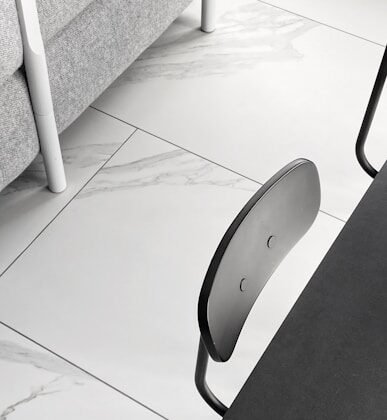
Marble, slate, granite, limestone and travertine provide genuine variations in color, veining and texture. No two natural stone installations look exactly the same.

Natural stone usually requires more attention than ceramic or porcelain. Some products need sealing, specialized cleaning products or additional substrate preparation. Material thickness and weight can also influence installation requirements.

Budget for upkeep

Homeowners considering natural stone should account for maintenance requirements as well as the initial material price.

Large-Format and Specialty Tile

Large-format tiles can reduce grout joints and create a continuous look across open rooms. Smaller mosaics, herringbone layouts and decorative patterns provide a different visual effect but require more individual positioning and cutting.

The installation surface becomes increasingly important as tile dimensions increase. Small variations in floor height can create noticeable differences between adjacent edges on long tiles.

Flatness first

A contractor should evaluate floor flatness before large-format material arrives rather than attempting to correct major substrate problems during tile setting.

What Professional Tile Installation Includes

Tile flooring depends on the layers underneath the visible surface. Attractive tile installed over a moving, damaged or significantly uneven substrate can develop cracked grout, loose pieces or other problems.

Professional installation therefore starts with evaluation and preparation, not immediately applying mortar.

Subfloor Repair
  1. Floor Inspection and Preparation

    Installers first measure the rooms and inspect the existing surface. The assessment identifies demolition requirements, floor-height changes, damaged areas, cracks, moisture concerns and transitions to neighboring materials.

    Existing flooring may need removal before work continues. Once exposed, a wood subfloor should provide adequate support for the selected tile assembly, while concrete requires inspection for cracks, contamination and uneven areas.

    Preparation can include repairing damaged subfloor sections, securing loose panels, patching surfaces or correcting high and low areas. Floor Ready Pro also provides dedicated subfloor repair services when deterioration must be corrected before installing new flooring.

  2. Layout and Tile Setting

    Installers establish reference lines before placing the first tile. Layout planning helps balance the floor and prevents unnecessarily narrow cuts along highly visible walls, cabinets or entrances.

    The selected mortar must match the tile, substrate and installation conditions. Installers spread the setting material and position each piece while maintaining the planned joint spacing and surface alignment.

    Large-format tile may require additional steps to achieve sufficient mortar coverage and control differences between neighboring tile edges. Patterned installations require even more attention to starting points, cuts and visual alignment.

  3. Grouting, Transitions and Final Details

    Tile needs adequate setting time before grouting. The exact waiting period depends on the setting material, tile and environmental conditions.

    Grout fills the joints and becomes part of the finished appearance. Color and joint width can substantially change how a floor looks, particularly when grout contrasts with the tile.

    Installers complete the project with required perimeter details, thresholds and transitions to carpet, hardwood, vinyl or other adjacent surfaces. Some stone and grout products may also require sealing according to manufacturer instructions.

Tile Installation Cost and Project Planning

Tile installation cost depends on the selected material, square footage, existing floor, substrate condition and layout. Basic ceramic flooring usually requires a smaller material budget than specialty porcelain or natural stone, while complex patterns and difficult demolition can increase labor.

For preliminary planning, many professionally installed residential tile floors fall around $7 to $25 per square foot. Straightforward ceramic projects may cost less, while natural stone, large-format porcelain, extensive floor preparation and detailed patterns can exceed that range.

$7–$25 per sq ft installed

Preliminary planning range for many professionally installed residential tile floors.

A 200-square-foot room priced at $10 per square foot represents approximately $2,000. Increasing the installed rate to $20 per square foot raises the same project to approximately $4,000.

Actual contractor estimates can differ substantially by location and project conditions.

Factors That Change the Final Price

Material represents only part of the budget. Removing an existing tile floor can add substantial labor because contractors may need to remove old mortar or underlayment before preparing the new surface.

Tile dimensions and layout also matter. Standard straight-set ceramic generally requires less installation time than herringbone, diagonal patterns, mosaics or large-format porcelain. Stairs, multiple doorways and rooms with numerous fixtures create additional cuts.

Compare written estimates that identify:

  • Material
  • Demolition
  • Disposal
  • Floor preparation
  • Setting materials
  • Grout
  • Trim
  • Transitions
  • Labor

Comparing these line items tells you more than comparing only the final total.

Where Tile Flooring Works Best

Tile can serve more areas of a home than bathrooms and kitchens. Room conditions should determine the material and finish.

Bathrooms

Bathrooms benefit from ceramic and porcelain because both materials tolerate routine surface moisture. Porcelain's low water absorption makes it particularly useful in moisture-prone environments.

The complete assembly still matters because tile and grout should not automatically be treated as a substitute for waterproofing where a waterproof system is required.

Kitchens

Spills, chairs, appliances, dropped objects and frequent cleaning make durability important. Porcelain and ceramic provide hard surfaces that clean easily, although mats can add cushioning around sinks and food-preparation areas.

Entryways and Mudrooms

Entryways and mudrooms experience concentrated traffic, wet footwear and abrasive dirt. Dense tile can perform well in these areas, while suitable surface texture can improve traction.

Laundry Rooms

Laundry rooms can also benefit from tile because the surface tolerates routine water exposure.

A washing-machine leak can still reach surrounding construction, so the flooring itself should not be the property's only moisture-control measure.

Living Rooms and Open-Plan Spaces

Tile can extend into living rooms and open-plan spaces, particularly in Florida and California homes where hard-surface flooring is common. Wood-look porcelain provides another option for homeowners who want plank visuals with tile construction.

Tile Compared With Other Flooring Materials

Tile generally offers better water resistance than standard laminate and avoids the moisture sensitivity of natural hardwood. The tradeoff is a harder and colder walking surface.

The right choice depends on the room, not on one material being suitable for every application.

Tile vs. Luxury Vinyl

Luxury vinyl provides another water-resistant alternative with a softer feel and usually simpler installation. Tile can last longer when the substrate and installation system perform correctly, while vinyl eliminates grout maintenance.

Vinyl Flooring

Tile Installation Across Washington, Ohio, Florida and California

Floor Ready Pro connects homeowners with flooring services across four states. Climate, housing construction and local property conditions can influence substrate preparation and material selection.

Tile Installation in Washington

In Washington, frequent rain makes tile useful around entrances, mudrooms, kitchens and bathrooms exposed to wet footwear and surface moisture.

Wood-framed homes

Many wood-framed properties require careful subfloor evaluation because tile needs a stable installation base.

Tile Installation Near Me

Tile Installation in Ohio

Ohio homes experience cold winters and humid summers. Tile works well in kitchens, bathrooms and entrances where snow, rain and everyday spills reach the floor.

Older properties

Older properties may require subfloor repairs or flattening before installation begins.

Tile Installation Near Me

Tile Installation in Florida

Florida has extensive slab-on-grade construction and a warm, humid climate. Porcelain and ceramic flooring are common options for kitchens, bathrooms, entrances and larger living areas.

Concrete slabs

Contractors should inspect concrete for cracks, moisture conditions and uneven sections before covering the slab.

Tile Installation Near Me

Tile Installation in California

California contains a wide range of housing conditions, from concrete-slab homes in Southern California to wood-framed properties elsewhere.

Contractor licensing

California separates ceramic tile work from the C-15 Flooring and Floor Covering classification, so homeowners should verify that a contractor holds the appropriate classification for the work being performed.

Tile Installation Near Me

Tile Floor Lifespan, Care and Replacement

Ceramic and porcelain tile can remain in service for 20 to 50 years or longer when the substrate stays stable and the installation receives appropriate care. Natural stone can also last for decades, although maintenance requirements vary by stone type and finish.

Routine care starts with removing sand and grit before abrasive particles accumulate. A vacuum suitable for hard floors or a soft broom handles loose debris, while cleaning products should match the specific tile and grout materials. Natural stone often requires pH-neutral cleaners because acidic products can damage certain surfaces.

Grout usually requires more attention than the tile itself. Dirt can collect in textured joints, and some grout products benefit from periodic sealing. Glazed ceramic and many porcelain surfaces generally require less treatment than porous natural stone.

One damaged tile does not automatically mean the entire floor needs replacement. Contractors can often remove and replace individual pieces when matching material remains available.

Find Tile Installers Near You

A tile contractor should provide more than a square-foot labor rate. A useful estimate explains what happens before, during and after tile setting.

Ask how the contractor plans to handle:

  • Existing flooring
  • Substrate preparation
  • Cracks
  • Floor-height differences
  • Setting materials
  • Grout
  • Transitions
  • Cleanup

For large-format tile or specialty patterns, ask about previous experience with similar material and layouts.

Floor Ready Pro helps homeowners compare tile installers and tile contractors in Washington, Ohio, Florida and California for ceramic, porcelain, natural stone and specialty flooring projects.

Frequently Asked Questions

How much does tile installation cost?

Professionally installed tile floors cost about $7 to $25+ per square foot. Tile material, demolition, substrate preparation, room layout and local labor rates determine the final price.

How long does tile installation take?

A straightforward residential room often takes several days, including preparation, tile setting, curing, and grouting. Demolition, subfloor repairs, waterproofing, large-format tile and complex patterns can extend the schedule.

Is porcelain or ceramic tile better for flooring?

Both can provide durable residential flooring. Porcelain has lower water absorption and generally suits demanding or moisture-prone areas, while ceramic can provide a lower-cost option for many interior rooms.

Can floor tile be installed directly over concrete?

Yes, when the concrete provides a suitable installation surface. Contractors should evaluate the slab for cracks, moisture, contamination, structural condition and flatness before setting tile.

Can a cracked floor tile be replaced?

A contractor can often replace an individual cracked tile without removing the entire floor. Repeated cracks require investigation because movement or another problem beneath the tile may cause replacement pieces to crack again.

Get a Tile Installation Quote

The best tile floor combines the right material with correct substrate preparation, layout and installation. Compare ceramic, porcelain and natural stone options based on the room, traffic, moisture exposure, maintenance requirements and project budget.

Floor Ready Pro helps homeowners find tile installation services across Washington, Ohio, Florida and California.